In India’s IT outsourcing world, there’s a silent maze between the client who pays and the developer who delivers.
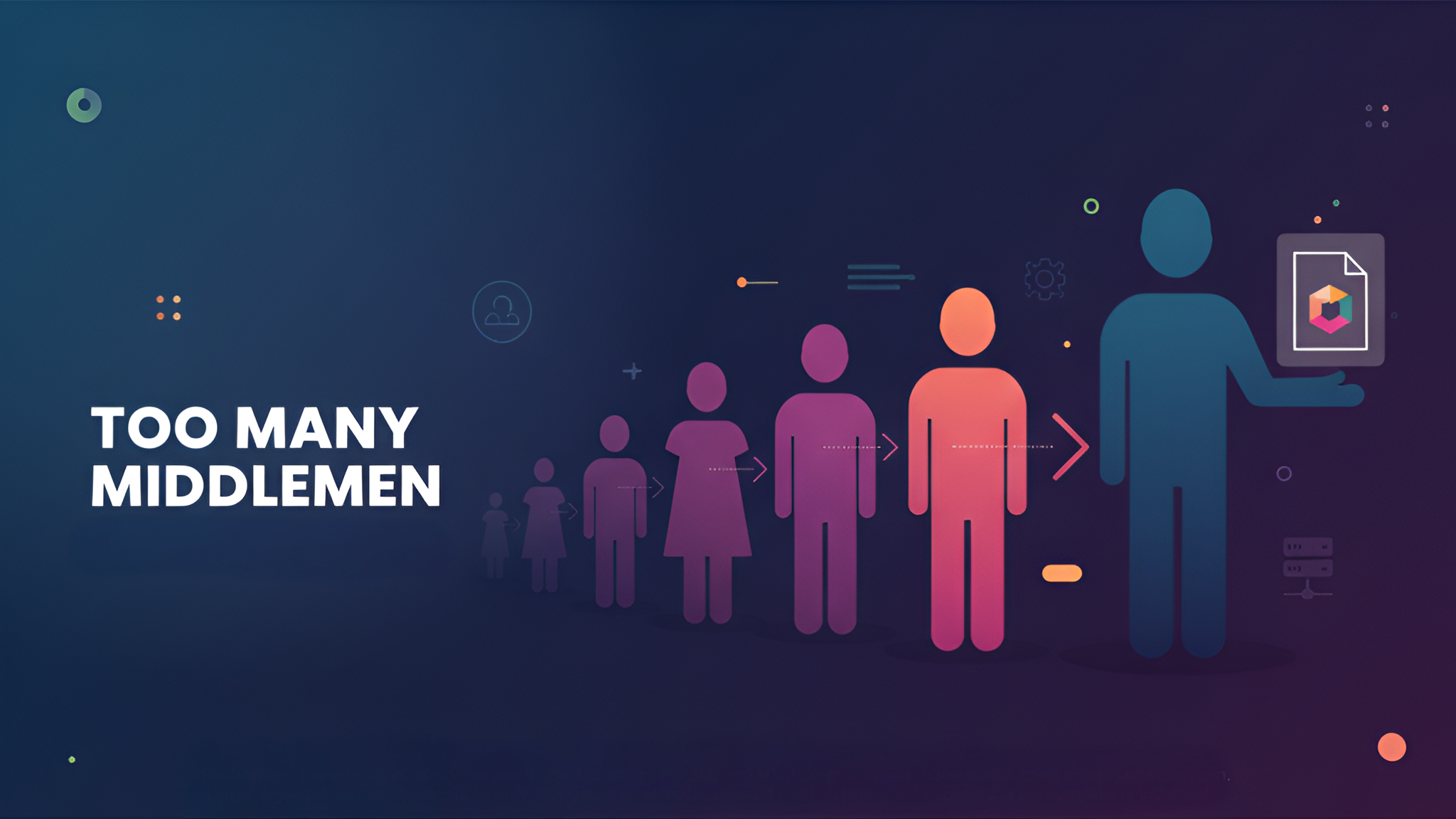
It often starts with someone who “has contacts.” They get a project from an overseas client, and then pass it down to another firm, who again routes it to someone else, and so on. By the time the actual developer touches the code, the project has already changed 3–4 hands. Each hand takes a cut, adds a layer of confusion, and removes a layer of ownership.
The result?
A project that nobody truly owns, only trades.
The Shift: From Delivery to Staffing
Many IT companies today are no longer delivery-driven; they’ve become staffing-driven.
Instead of focusing on technology and value, they’ve turned into resourcing firms, renting out people instead of solving problems.
These middle players often have little to no understanding of what the client’s project is really about. Yet, they act like decision-makers, controlling money and direction, while the person actually building the product is invisible.
As our CEO put it during our discussion:
“The middleman chain is really long between the client and the person actually doing the work.
And the balance of power has shifted to those who add the least value.”
How Clients Suffer
From the client’s perspective, the harm is quiet but costly:
- Lost clarity: Communication gets passed down like a game of telephone; what was requested isn’t always what’s built.
- Reduced accountability: When the project fails, no one takes responsibility; everyone points upward or downward.
- Hidden markups: The client ends up paying 3–4 times what the developer earns, without knowing that most of their money funds “connectors,” not creators.
- Security risks: With each new link in the chain, confidential data passes through hands it was never meant to reach.
By the time a client realizes what’s happening, the damage is already done, trust is lost, timelines slip, and budgets swell.
The Developer’s Side
For developers, it’s even more demoralizing. They do the real work but remain unseen and underpaid.
They rarely interact with the actual client, and often, their compensation arrives last; if not reduced along the way.
It’s an ecosystem where those who add the most value hold the least power.
Why It Keeps Happening
Because it works, at least for the middlemen.
They take zero risk, promise availability, and live off markups.
Most are not even technical people, just strong networkers pretending to be IT firms. They act like HR agencies but without HR ethics, often lacking even basic professional courtesy.
For clients, it’s easy to fall for, polished websites, fake “offices,” and convincing sales calls mask what’s really going on.
But in reality, it’s often a resourcing chain, not a tech partner.
A Fairer Model Forward
True outsourcing partnerships require:
➝ Transparency about who is doing the work
➝ Fair pay for the people creating real value
➝ Direct ownership over delivery
➝ Companies acting like partners, not brokers
Clients deserve clarity.
Developers deserve recognition.
And IT companies should deliver outcomes not layered invoices.
“If your business model needs four layers to make a simple delivery profitable, it’s time to question what business you’re really in.”
Declaration
These insights are based on what we’ve observed across the SME and MSME segments of the Indian outsourcing ecosystem. Larger organizations may operate differently. Our goal is to promote awareness and ethical collaboration; not to generalize or target any specific company or individual.